Chapter 9 of 10
Contrary Winds
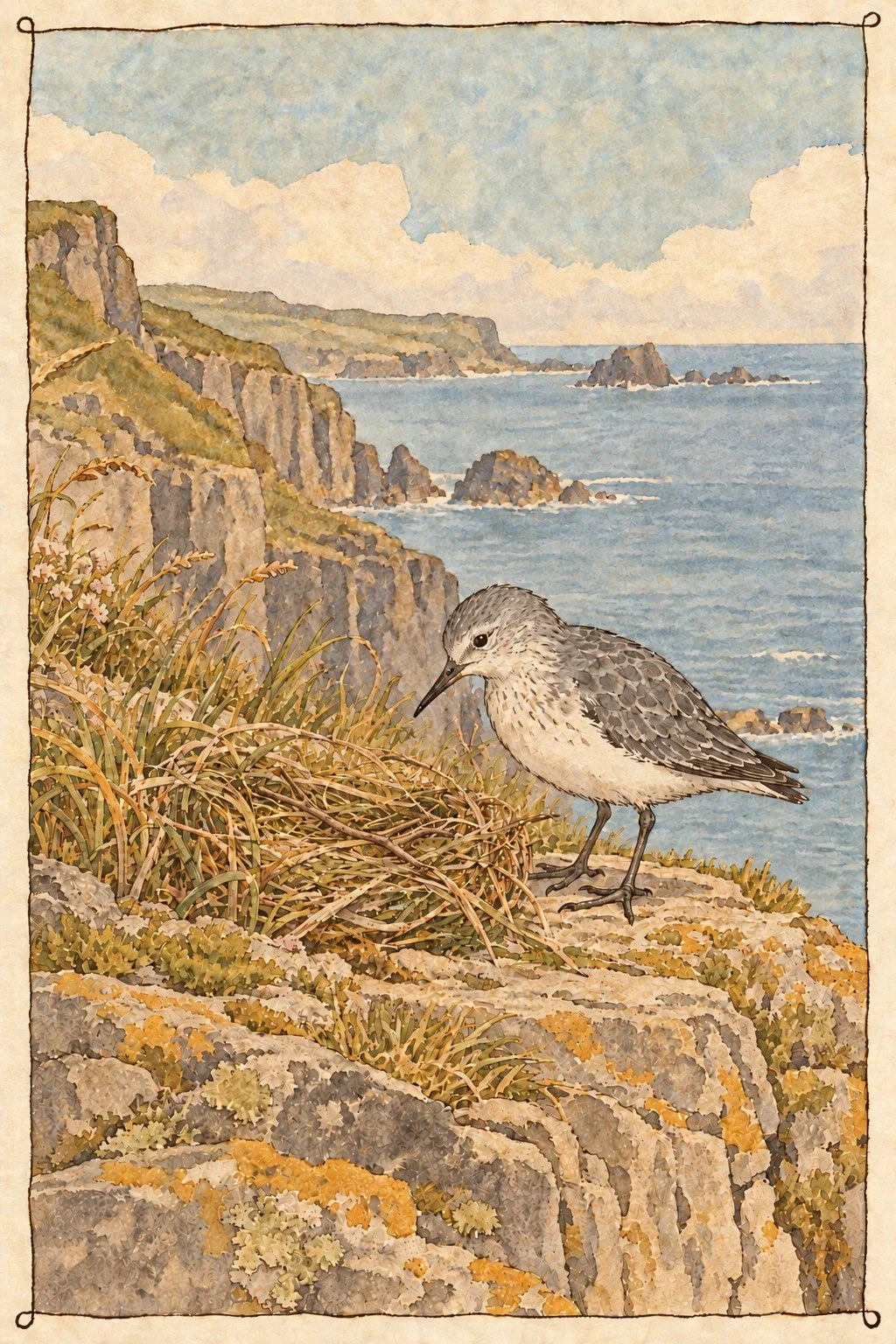
Late one afternoon, land appeared ahead. It was the long southern coast of the mainland. Jack followed it westward. Dark hills rose beyond the shore.
The wind strengthened. Clouds gathered above the mountains. Ahead, a narrow headland reached into the sea.
I call it The Cape of Contrary Winds.
Jack sighed.
“What is it actually called?”
That is immaterial.
“Do you know?”
That is also immaterial.
“You don’t know.”
The Cape of Contrary Winds it is.
By the time Jack reached the cape, the weather had turned. Wind struck the cliffs from two directions. Rain moved sideways. Waves broke white against the black rocks below. Narrow shelves crossed the cliff face above the tide.
Jack had flown through worse storms.
But nearby, another albatross had not. He was young. His name, Jack would later learn, was Otto.
Otto had recently grown into his wings and had not yet reached an agreement with them. At that moment, the wind was winning the argument.
And Otto was flying directly toward the cliffs.
“Turn toward the sea!” Jack tried to shout through the twig.
Otto did not hear him. Jack flew closer. The twig was still clenched in his bill.
He tried again.
“TRRNN TWRRD THH SSHH!”
This was not useful. The cliffs were getting closer. Jack felt the twig between his jaws.
For more than a year, he had carried it through storms, grief, questions, strange islands and one deeply unnecessary pebble competition.
He could not safely stow it in this wind. There was no time to land. He could not simply drop it.
Could he?
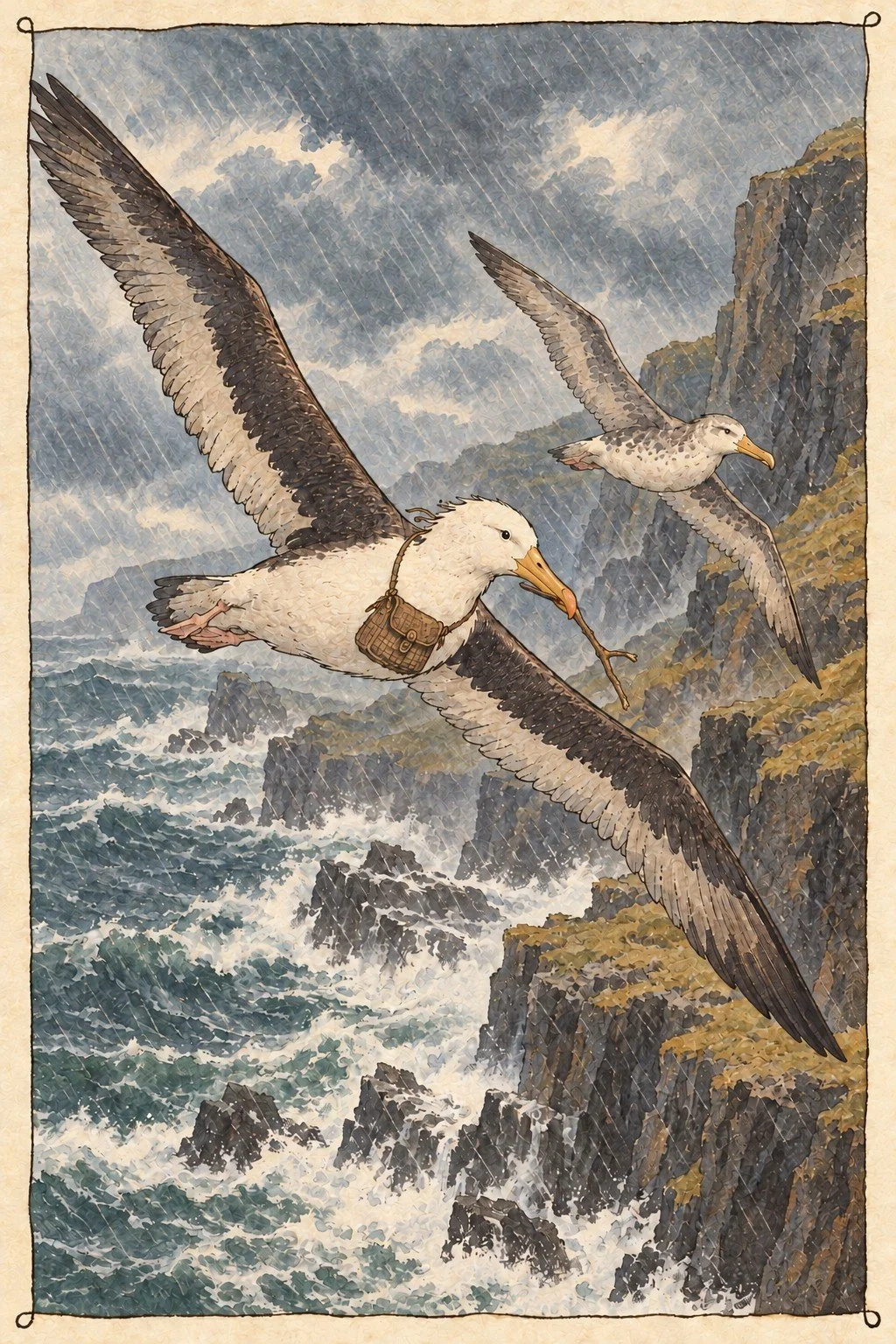
Jack flew closer to Otto. He tried calling again without opening his beak fully. Otto kept moving toward the rocks.
Jack looked down. Black water crashed against the cliff below. He imagined the twig falling into it. Gone. No chance to retrieve it. No final decision. No proper goodbye.
Then Otto’s left wing caught a violent gust. The young bird lurched toward the cliff.
Jack understood that he had two things he wanted to keep safe. Only one of them was alive.
Jack hesitated. Only for a moment. But moments can be surprisingly large when something important must fit inside them.
The twig was the first piece of his nest with Sadie. It had been there when their life together began. It had survived the ending. It had traveled an ocean with him.
Otto did not know any of this. Otto only knew that he was frightened and that the cliff was getting closer.
Jack opened his bill. The twig fell.
“TURN TOWARD THE SEA!”
Jack saw the twig drop.
For one strange second, everything slowed. It spun through the rain. A gust carried it toward the cliff. Then spray hid it.
Jack’s body reacted before his mind did. He almost dove after it.
Almost.
Then Otto disappeared behind a wall of spray.
Jack turned away from the falling twig. He flew toward Otto.
“FOLLOW ME!”
This time Otto heard. Jack angled toward open water. Otto followed.
They fought the wind together until they reached a sheltered cove on the far side of the cape.
Jack landed first. Otto landed less successfully. He bounced once. Rolled twice. Then stood quickly and looked around to see whether anyone had noticed. Jack had. He politely inspected a cloud.
“My name’s Otto,” said the young bird. “Thank you.”
“You’re welcome.”
“Was I in danger?”
“Yes.”
“I thought so.”
The storm passed during the night. By morning, Otto was ready to continue north.
“Where are you going?” Jack asked.
Otto pointed with his beak.
“That way.”
“Do you know what’s that way?”
“No.”
Jack smiled.
“That can work.”
Otto took off. Jack watched him disappear along the coast.
Jack left his satchel above the cove’s tideline. Then he turned back toward the cape.
He knew where he had let the twig go. He did not know whether there would be anything to find.
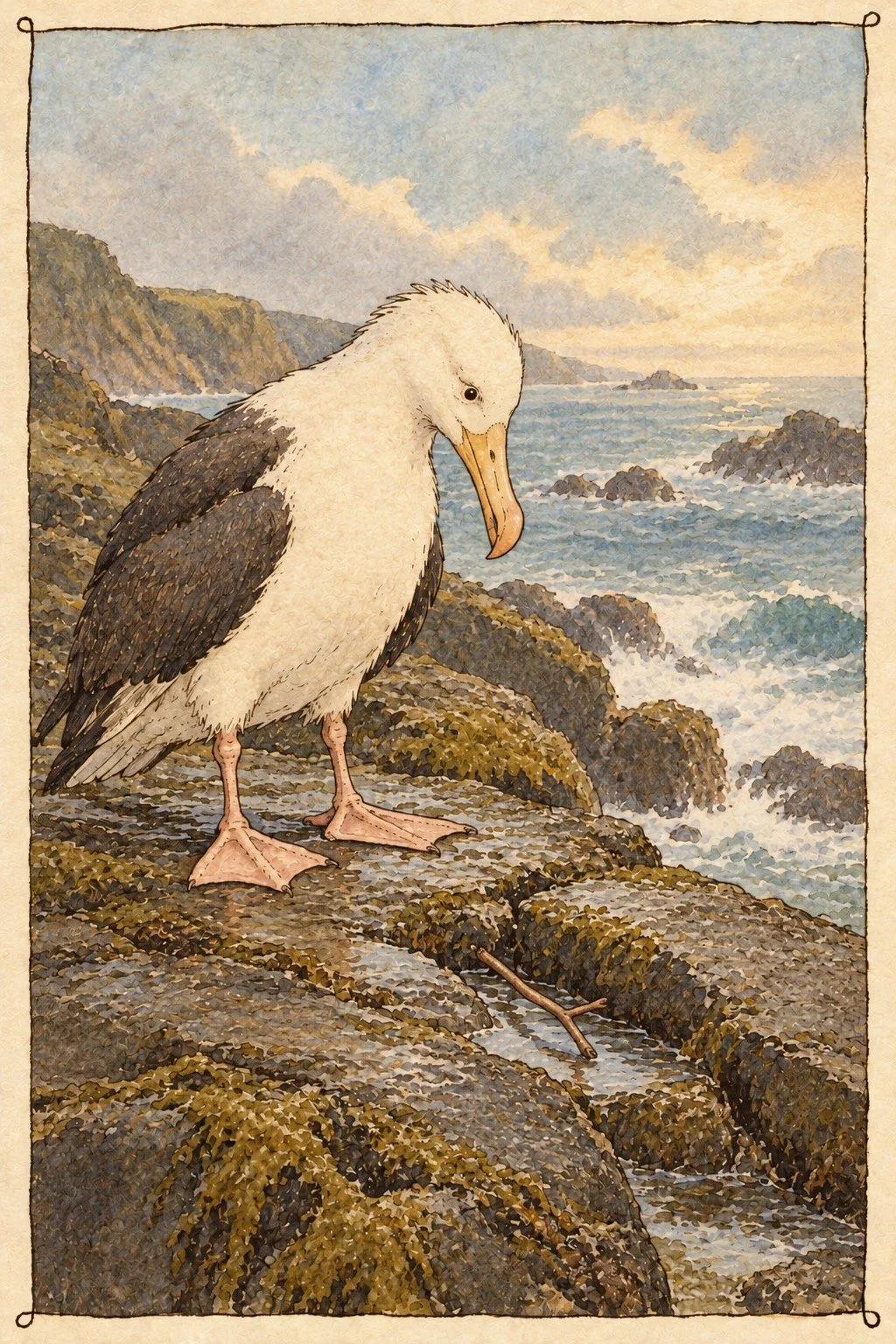
Jack circled the cliff once. Then again. On the third pass, he saw a crooked line on a shelf above the tide. Jack landed on the black shelf.
The twig lay in a narrow crack, caught behind a small ridge of stone. Rain had darkened the wood.
Jack stood over it.
For much of the journey, he had imagined that losing the twig would be unbearable. For several terrible seconds during the storm, he had believed it was gone. Now it was sitting at his feet. He could pick it up. No storm had taken the decision from him. No one had stolen it. No one was asking him to leave it.
This time, Jack could choose.
Jack looked at the twig.
He remembered the nest. He remembered Sadie placing it there. He remembered the lift inside him whenever she returned. He remembered the morning she left. The memories arrived whether he was holding the twig or not.
Jack looked down at it again.
The twig had not been keeping the memories safe. It had only been giving Jack something to hold.
Then Jack thought about all the times he had put it down. To eat with his friends. To answer Esther. To speak with Beatrice. To laugh with Pip. To eat supper with Celeste. And finally, to call out to Otto.
Nearly every new thing that had entered Jack’s life had required him, at some point, to open his beak.
The twig had never prevented him from living. But carrying it had always required an accommodation.
He had grown used to carrying it. That did not mean he had to pick it up again.
Jack had once believed the twig was a piece of home. Perhaps it was.
But home, he now understood, was not something he could carry in his mouth. Home had been his nest with Sadie. That home had been real. Its ending did not make it less real.
But home had also been his friends sitting beside him when he could barely speak. It had been Beatrice’s mossy island. Pip beside him on an empty sea. Supper with Celeste. Even, briefly and inexplicably, a colony of penguins arguing about pebbles.
Home could be more than one place.
Jack looked once more at the twig.
Home, he realized, was not what you carried away from a place. Home was where you could put things down and still belong.
So Jack left the twig on the rock.
He did not throw it. He did not break it. He did not make a speech. He simply stopped carrying it.
After Jack flew away, a small gray shorebird named Nell found the twig. She examined it. Turned it once. Then twice. Apparently satisfied, she carried it to a half-built nest farther along the cliff.
To her, it was not a symbol. It was not evidence. It was not the remains of a great love or a terrible loss. It was an excellent twig.
Which, after everything Jack had asked of it, was probably a relief.